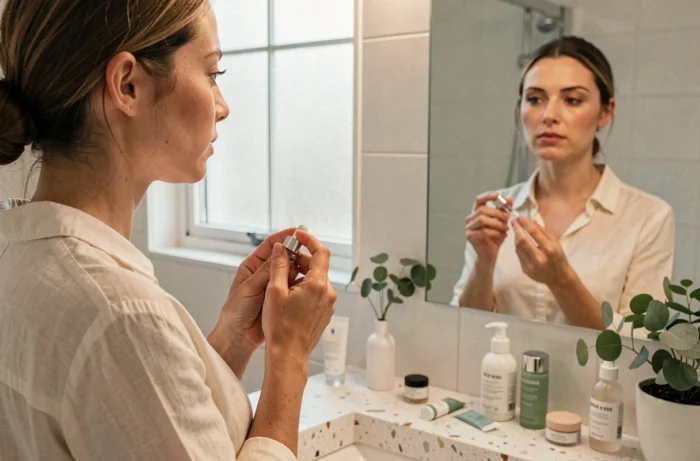
Women under 35 use an average of five facial skincare products, according to the 2026 Skin Barometer conducted by Typology and Ifop. This figure challenges the idea of a widespread shift toward minimalist routines. This season highlights a tension between the constant stream of new launches and the real need to understand what we put on our skin.
Sensitive skin and beauty launches: the paradox of ever-longer routines
Have you noticed that your bathroom shelf holds more bottles than it did two years ago? It’s no coincidence. The range of facial skincare, serums, and hybrid makeup products has never been broader. Every brand is launching formulas enriched with targeted active ingredients.
The problem is that using more products doesn’t mean your skin is better protected. The Ifop survey reveals that a significant proportion of users don’t know which active ingredients their skincare products actually contain. People buy a niacinamide or bakuchiol serum without always knowing why, or at what concentration it works.
For reactive skin, this buildup can backfire. Layering an exfoliant, a vitamin serum, and a peptide cream without understanding how these ingredients interact increases the risk of irritation. Check the latest news on Beauté Ultime regularly to keep up with launches that are genuinely worth your attention.
The real challenge this season isn’t trying every new product. It’s choosing fewer products that are better suited to your skin type.

Ingredient transparency in cosmetics: knowing how to read a label is no longer enough
Brands now display their INCI lists prominently on packaging. Some go further, highlighting natural-origin scores or active ingredient percentages. This is real progress compared with the situation ten years ago.
But listing an ingredient and making it easy to understand are two different things. Take a concrete example: a skincare product that advertises “5% niacinamide” on its packaging. What does that mean for someone with sensitive skin? Is that a low or high concentration? Should it be used morning or night? Which other active ingredients can it be combined with—and which should it not be used alongside?
Effectiveness and value for money remain consumers’ top priorities, according to the 2026 Barometer. They want visible results, not just a transparent label. Brands that simply list trendy active ingredients without explaining what they do are missing the point.
Three ways to decode a skincare product before buying it
- Check where the star ingredient appears in the INCI list: the higher up it is, the greater its concentration. An ingredient near the end of the list plays a negligible role in the formula.
- See whether the brand states the exact concentration of the main active ingredient. A brand that doesn’t disclose this figure is relying more on marketing than on technical transparency.
- Cross-check the information with a healthcare professional: the 2026 Barometer confirms that pharmacists and dermatologists remain the most frequently cited sources of advice for blemishes and enlarged pores, ahead of artificial intelligence.
European cosmetics regulations: reformulations are mandatory, not cosmetic
The changes in texture and formula we’re seeing this season aren’t all down to aesthetic choices. European regulations require brands to make specific reformulations, with firm deadlines and no sell-through period for non-compliant products.
This means that some ingredients or concentrations permitted yesterday may not be allowed tomorrow. Brands therefore have to adapt their formulas, sometimes at short notice. A bestselling serum may change texture or composition from one season to the next without consumers being clearly informed.
Why does this matter to consumers? Because a reformulated product doesn’t always deliver the same results as the previous version. If your usual cream seems different, it may not be your imagination: a regulatory requirement may have changed the formula.
Makeup and hybrid skincare products under pressure
Makeup products that incorporate skincare ingredients (serum foundation, blush enriched with hyaluronic acid) are particularly affected. A hybrid product must comply with both cosmetics standards and the restrictions on each active ingredient. This makes formulators’ work more complex and may explain why products look or feel different from one collection to the next.
Sensory well-being and beauty: fragrance as an everyday ritual
This season, the line between skincare and emotional well-being is becoming blurred. A Circana study cited by WWD in November 2026 describes the use of fragrance and skincare as rituals for relaxation and mood enhancement, rather than simply steps in a beauty routine.
Fragrance, in particular, is now worn every day rather than being reserved for special occasions. Scented lip balms, body and hair mists, and creams with comforting textures are all part of this shift. Beauty products are becoming tools for emotional regulation.
This trend has a tangible impact on formulas: brands are investing more in textures (melting, creamy, gel-cream) and fragrance notes in their body and facial skincare. The pleasure of applying a product now matters just as much as its technical promise when it comes to buying decisions.
AI beauty advice: a discovery tool, not a diagnosis
The 2026 Barometer notes that some people use artificial intelligence to find information about their skin concerns. Chatbots and skin analysis apps are becoming increasingly common in the beauty world.
But these tools are no substitute for professional advice. For blemishes and enlarged pores, pharmacists and dermatologists remain the first professionals people turn to. AI can help you discover an ingredient or compare products. It can’t assess the actual condition of reactive skin or predict how it will respond to a new active ingredient.
This season’s new launches make plenty of promises. The challenge for consumers remains the same: telling useful innovation apart from a simple marketing refresh. A routine of three carefully chosen products, checked by a professional if your skin is reactive, offers better protection than a shelf full of the latest launches.


