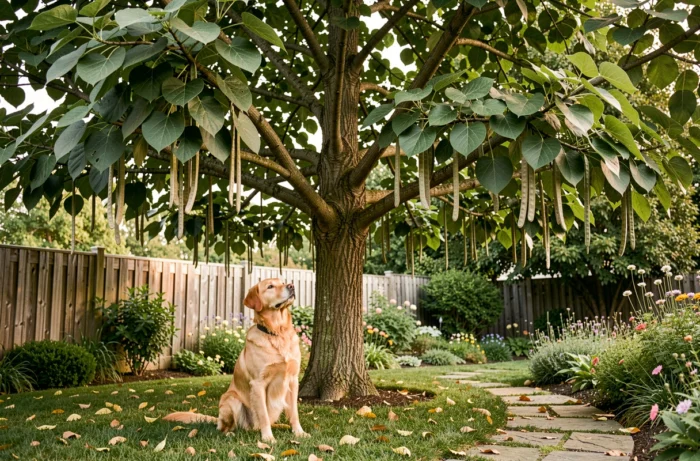
Catalpa rarely appears in veterinary toxicology databases in the same category as oleander or laburnum. This lack of formal classification is not a guarantee that it is harmless, but it does help put the risk into perspective: this tree is more likely to cause digestive irritation than severe systemic poisoning.
Catalpine and glycosides: the phytochemical profile of catalpa
Catalpa seeds and pods contain catalpine, an iridoid that can irritate the digestive tract lining. This compound is concentrated in the long, woody pods that remain on the tree through part of the winter before falling to the ground, where animals can reach them.
The leaves have a different profile. No cited veterinary source lists the leaves of Catalpa bignonioides among high-risk plant parts. For more information on the toxicity of catalpa leaves, it is important to distinguish between mechanical irritation (fine hairs on the underside of the leaf blade) and chemical toxicity.
Confusion with laburnum (Laburnum) regularly catches owners out. Laburnum produces pods that look similar, but they contain cytisine, an alkaloid classified as highly toxic in veterinary medicine. Misidentifying a catalpa in a general-interest article can cause unnecessary panic—or, conversely, falsely reassure someone who has mistaken a laburnum for a catalpa.
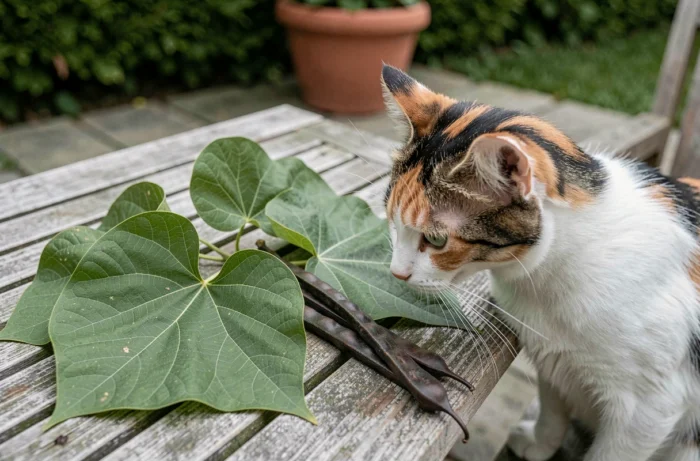
Catalpa toxicity in dogs, cats and livestock
Catalpa falls into a grey area in veterinary toxicology: no confirmed systemic toxicity, but a genuine potential for irritation. The ASPCA notes that ingesting plant material can cause vomiting and digestive discomfort in dogs and cats, even when the plant is not classified as toxic.
Dogs and cats
A dog chewing on pods that have fallen to the ground may experience mouth irritation and temporary gastrointestinal upset. Kittens, being smaller and more inclined to explore, may be more sensitive. The amount ingested and the animal’s size are the two key details to give the veterinarian.
Tortoises, rabbits and small herbivores
Toxicology databases mainly cover dogs and cats. Extrapolating their findings to tortoises, rabbits or rodents is methodologically unsound. These species have very different liver metabolisms. An iridoid tolerated by a 30-kilogram dog may cause pronounced effects in a 2-kilogram rabbit.
Horses and ruminants
Catalpa is not listed among trees that are dangerous to horses in the same category as yew or laburnum. Horses generally avoid the bitter leaves. The main risk comes from accidentally eating large quantities of pods in a pasture where the fruit has accumulated at the end of the season.
Catalpa parts to watch: leaves, seeds and pods
Not all parts of the tree pose the same level of risk. We recommend prioritizing monitoring according to the plant part involved.
- Pods and seeds contain the highest concentrations of catalpine and pose the main risk. They can remain on the ground for several weeks after falling and may attract animals with their crunchy texture.
- Fresh leaves are most likely to cause mild digestive irritation. Their bitterness discourages most animals from eating a significant amount.
- The fragrant, nectar-rich flowers have not been documented as toxic. Domestic animals rarely eat them.
- No risks associated with the bark or wood have been identified in the available literature.
This ranking points to a targeted approach: regularly clearing fallen pods removes most of the risk.

Catalpa bignonioides or globe catalpa: variety affects the risk
Catalpa bignonioides ‘Nana’ (globe catalpa) almost never flowers. No flowers means no pods. For a garden used by animals, this variety eliminates the main source of risk while retaining its ornamental shape and the generous shade of its foliage.
Common catalpa (Catalpa bignonioides), on the other hand, produces clusters of white flowers followed by long, woody pods. In a small garden where a dog or chickens roam freely, the annual crop of pods creates a real maintenance burden. Choosing the right variety is therefore the first preventive measure, well before considering fencing or cleanup.
What to do if an animal ingests catalpa
Three factors guide the response: the plant part ingested, the estimated amount and the animal’s weight. An adult dog that has chewed a leaf does not require the same response as a kitten that has swallowed several pieces of pod.
- Note which part of the plant was involved (leaf, pod, seed or flower) and keep a sample for the veterinarian.
- Watch for signs in the hours that follow: excessive drooling, vomiting, diarrhea or lethargy.
- Contact a veterinarian if symptoms persist for more than a few hours or if the animal is small.
In most cases, active monitoring for a few hours is sufficient, except for very young animals or species whose metabolism of this plant is poorly documented.
Planting a catalpa in a garden where animals roam is still a reasonable choice. Choose the globe variety for a small space, and keep the ground clear beneath a common catalpa during fruiting season: the real risk comes from fallen pods, not from the shade of its foliage.


