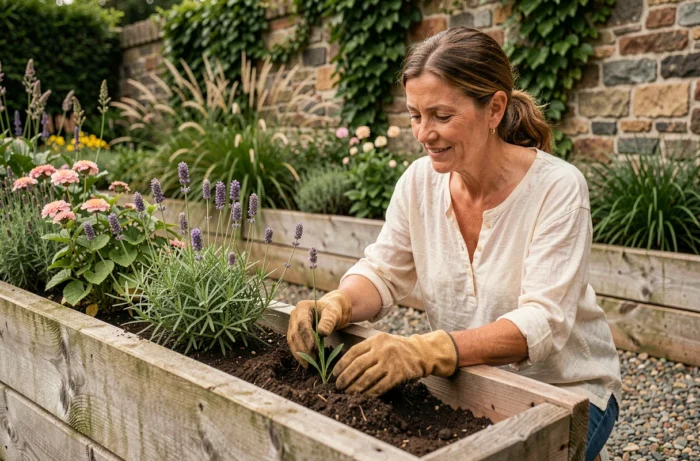
Designing a garden starts with creating an outdoor space that works with the resources available on the property, not against them. A sustainable garden is built around the soil on site, the local climate and how the space will be used. Water restrictions, now common and sometimes still in place even after the rain returns, mean that irrigation needs to be considered from the design stage.
Gardens and water restrictions: design a landscape that can thrive without regular watering
Drought-related rules vary from one municipality to another and can change over the course of the season. Some ban lawn watering, while others restrict watering flower beds and vegetable gardens to specific time slots. In Creuse, even after rainy spells, easing the restrictions did not mean a return to normal: watering limits remained in place because groundwater reserves were still fragile.
The implications for a landscaping project are clear. A sustainable garden must remain usable without regularly watering ornamental areas. Relying on a conventional lawn as the main surface means risking a yellowed, unusable space as soon as the first local order is issued.
There are three ways to avoid this:
- Replace lawns with drought-resistant ground cover (wild thyme, yarrow, sheep’s fescue) in areas that are not walked on, while keeping a smaller patch of grass where children play or chairs are set out.
- Install a rainwater collection system when building a patio or garden shed, so you have an independent water supply during alerts.
- Group plants according to their water needs (the hydrozoning principle): place water-hungry plants near the collection point and drought-tolerant plants around the perimeter.
Professionals who specialize in creating green spaces suited to local conditions can help with this type of project, including those listed at https://www.jamet-espaces-verts.fr.
Living soil and mulch: the technical foundations of a long-lasting garden
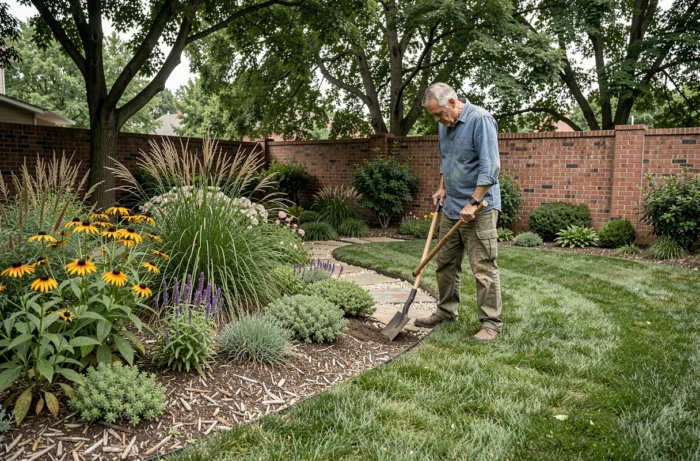
Before choosing plants, it is important to understand what is happening beneath the surface. Living soil—rich in microorganisms, earthworms and mycorrhizal fungi—holds water more effectively, nourishes roots and limits erosion. By contrast, soil compacted by poorly managed earthworks or left bare after planting dries out quickly and allows water to run off.
Organic mulch (shredded branches, dead leaves, hemp straw) serves three purposes at once: it reduces evaporation, nourishes soil life as it decomposes and slows the germination of weeds. A sufficiently thick layer, replenished once or twice a year, can significantly reduce the need to water flower beds.
Test your soil before planting
A simple test using vinegar and baking soda can indicate the soil’s pH. Acidic soil is suited to heathers, camellias and hydrangeas. Alkaline soil is suitable for lavender, rosemary and boxwood. Planting without knowing your soil is a gamble.
Plant choices should follow the soil, not the other way around. Heavily amending soil to force unsuitable plants to grow is expensive and produces fragile results.
Native plants and invasive potential: choosing plants thoughtfully
Native plants provide the most reliable foundation for a sustainable garden. Adapted to the climate and soil of their region, they need less maintenance and are better able to withstand seasonal changes. They also provide resources for local pollinators, which have co-evolved with them over generations.
A less common but useful habit is to check the invasive potential of ornamental plants before buying them. Artificial environments such as gardens can provide a gateway for exotic species. Once some of these plants escape the property, they compete with native flora and disrupt neighboring ecosystems.
The Nouvelle-Aquitaine Regional Biodiversity Agency also recommends using native seeds as one way to support biodiversity in artificial environments. Before placing an order with a garden center, a quick search of regional invasive species lists can help you avoid costly mistakes.
Differentiated management: plan for less-maintained areas from the outset
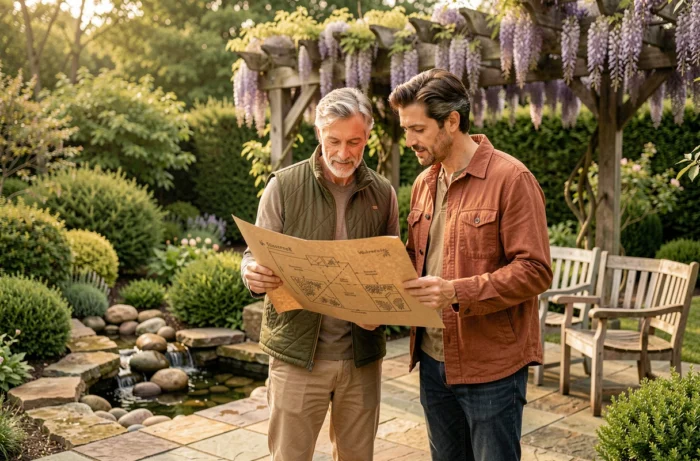
Differentiated management means maintaining different areas of the garden to different standards. Far from being a sign of neglect, it is a key landscaping choice to make when drawing up the plan, not as an afterthought.
In practice, this means dividing the garden into three types of space:
- Living areas (patio, play area, main path) receive regular maintenance: mowing, pruning and cleaning.
- Transition areas (the back of a flower bed, the edge of a hedge) are mown or cut only a few times a year, allowing low-growing plants to flower and insects to nest.
- Quiet areas (a corner of the property, the base of a wall, a slope) are left to grow freely. They provide shelter for small wildlife and help connect green habitats across neighboring gardens.
This approach reduces overall maintenance time while creating a variety of settings. A garden where everything is mown to the same height lacks visual depth. A garden with different layers, where tall grasses sway behind a neat patio, creates contrast and gives the space character.
Connect your garden to the surrounding area
In built-up areas, vegetation is often fragmented. Green corridors between gardens and nearby habitats help wildlife move around and plants spread. Leave a gap beneath a fence, plant a mixed hedge along the property line instead of building a wall, or simply avoid paving every square inch: these choices turn an isolated garden into a link in an ecological network.
A successful garden design depends as much on what you decide not to do as on the plants themselves. Limiting paved areas, allowing part of the garden to follow its own rhythm, and checking the watering restrictions in force in your municipality before planning anything: these habits, built in from the start, create a green space that can make it through the summer without relying on a tap.


