A pad thai can be bland or spectacular depending on the restaurant, and a pho can smell of star anise or industrial bouillon cubes. Choosing authentic Asian specialties for a delicious meal means looking beyond the dish name on the menu. A few practical pointers are all it takes to tell the difference between food designed to please quickly and a preparation that respects the balance of flavors in a specific regional tradition.
Regional variations in Asian dishes: what the name doesn’t tell you
Have you ever noticed that two restaurants serving “Thai green curry” can bring out dishes with radically different flavors? That’s normal. The same name often covers several local traditions.
Sushi, for example, doesn’t refer to just one dish. Japanese varieties differ by region, the fish available, and how the rice is prepared. Historically, sushi originated as a way of fermenting rice to preserve fish. Vinegar later replaced fermentation, changing the textures and flavors. Two kinds of sushi with the same name can therefore taste very different.
This diversity applies across Asian cuisine. A northern Vietnamese bo bun differs from its southern counterpart in its seasoning and herbs. An Indonesian rendang simmered for several hours is nothing like a quick version. Identifying a dish’s region of origin helps you assess its authenticity.
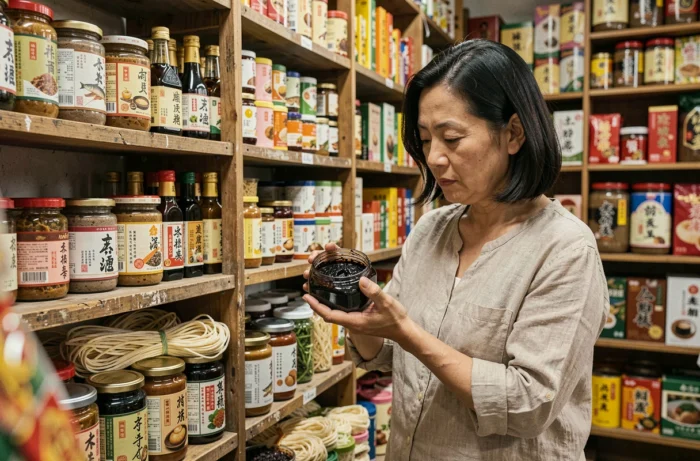
When a restaurant specifies the province, city, or regional variation of its dishes, that’s a positive sign. It reflects knowledge that goes beyond a simple list of popular recipes. Online grocers and specialty food shops focused on a specific regional cuisine follow the same approach, as seen at https://maisonngo.fr/ for Vietnamese specialties.
Quality indicators on a menu or in an Asian grocery store
You don’t need to be an expert to spot an authentic dish. A few details on a menu or package can provide reliable clues.
What a restaurant menu reveals
A very long menu covering Thai, Japanese, Chinese, and Vietnamese cuisine all at once often points to standardized cooking. A menu focused on a single culinary tradition is a sign of specialization.
In France, the “fait maison” (“homemade”) label is regulated. It guarantees that a dish was prepared on-site using raw ingredients. Its presence on an Asian restaurant’s menu is worth noting. Likewise, the display of allergens, which is mandatory in all restaurants, offers an indirect glimpse of the ingredients actually used.
What to look for on a grocery product
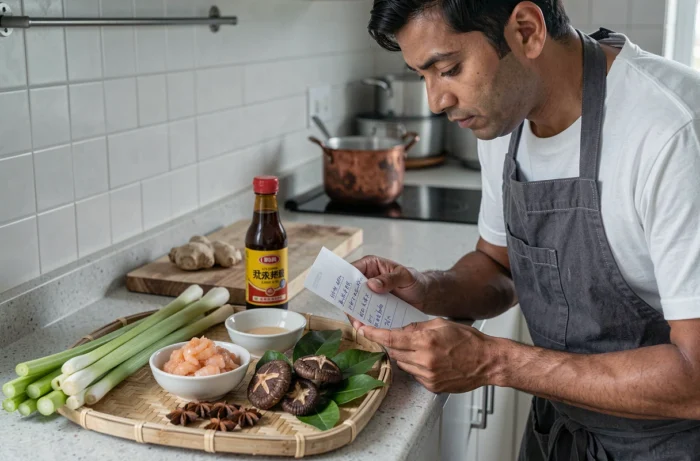
- A short ingredient list with recognizable names (shrimp paste, lemongrass, galangal) suggests a product made in keeping with traditional recipes.
- A precise geographic origin for the product (province, country of manufacture), rather than a vague “product of Asia” label.
- Fermented ingredients (miso, fish sauce, soybean paste), which take time to prepare and point to an artisanal process.
An artisanal product rarely lists more than ten ingredients. Industrial versions make up for it with flavor enhancers and thickeners.
Balancing Asian flavors: a guide to what you need to know
Asian cuisine is based on a principle that European cuisines apply less consistently: balancing salty, sweet, sour, bitter, and umami flavors in a single dish.
Umami, the fifth taste, comes from ingredients such as soy sauce, fish sauce, dried mushrooms, and miso. A dish that lacks depth probably relies on salt alone where the traditional recipe combines several sources of flavor.
Why does this matter? Because an authentic pad thai combines the sweetness of palm sugar, the sourness of tamarind, the saltiness of fish sauce, and the heat of chili. If one of these notes is overpowering or the dish tastes one-dimensional, the recipe has been simplified.
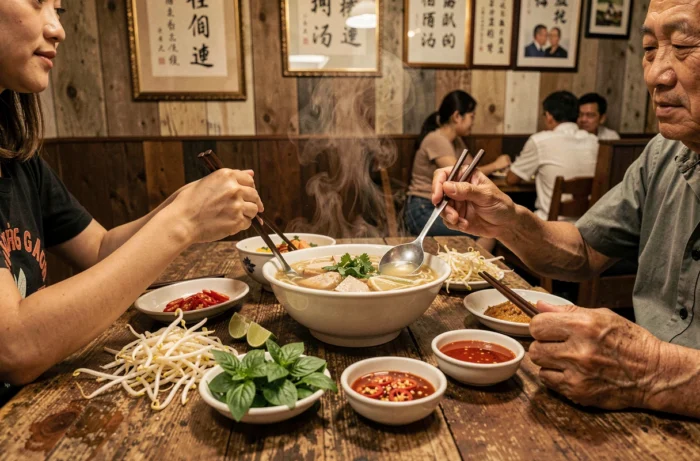
The same principle applies to soups. Vietnamese pho gets its complexity from broth simmered for several hours with whole spices (star anise, cinnamon, cloves). A flat broth with a uniform flavor is a sign that preparation has been rushed.
How to test the balance at home
When cooking Asian recipes, taste the dish and identify which flavor stands out. If it tastes bland, add a source of umami. If it’s too sweet, a splash of rice vinegar can restore the balance. Adjusting in small increments rather than adding more salt is the approach most faithful to traditional practices.
Cooking techniques and choosing fresh ingredients
High-heat wok cooking, quick stir-frying, gentle steaming: each technique creates specific textures that other methods can’t replicate. A vegetable stir-fried in a wok stays crisp at the center. The same vegetable cooked in a flat pan releases water and loses its texture.
- Steaming (dim sum, baozi) preserves the texture of the dough and the juiciness of the fillings. It requires a bamboo basket or a suitable steamer.
- Wok stir-frying calls for intense heat and a very short cooking time, sometimes less than a minute per ingredient.
- Deep-frying tempura or spring rolls requires a steady temperature to achieve a crisp coating without excess grease.
When it comes to ingredients, fresh aromatic herbs make a noticeable difference. Cilantro, Thai basil, Vietnamese mint, scallions: these herbs lose their aroma within a few days. Adding them at the last moment, as cooks in Southeast Asia do, brings out their full flavor.
In 2013, UNESCO added washoku (traditional Japanese cuisine) to its Representative List of the Intangible Cultural Heritage of Humanity. This recognition is less about individual recipes than about the practices as a whole: nutritional balance, respect for the seasons, and visual presentation. It’s a useful way to assess the quality of a Japanese meal beyond taste alone.
Ultimately, choosing authentic Asian specialties comes down to noticing a few practical details: the menu’s geographic specificity, the ingredient list, the balance of flavors on the plate, and the cooking technique used. These pointers work just as well in a restaurant or grocery store as they do in your own kitchen.


