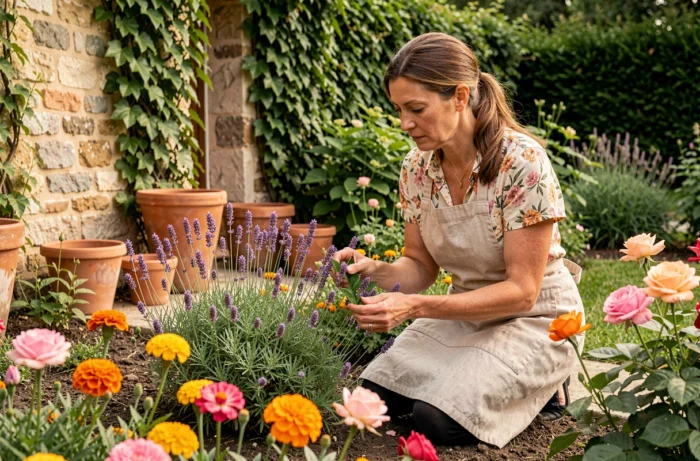
A garden in bloom twelve months a year requires more than simply choosing a list of plants for each season. Staggered flowering, drought resistance, winter hardiness, flowerbed maintenance and the legal status of each species are all factors to weigh before making a purchase.
European Implementing Regulation 2025/1422 added plants to the list of invasive alien species of Union concern, with bans taking effect on 7 August 2025. Choosing flowers for your garden therefore means checking in advance which plants you are still allowed to grow.
Invasive alien species and garden flowers: the regulatory check to make before buying
Most gardening guides showcase plant selections without mentioning legal restrictions. The rules have changed. Since Regulation 2025/1422 came into force, certain plant species have been subject to bans on sale, propagation and planting. Garden centres are required to remove these plants from their shelves, but online stock and exchanges between individuals can sometimes slip through the net.
Before adding a plant to a flowerbed, checking the official list of invasive alien species of Union concern is the safest approach. Water primroses, for example, colonise waterways and ditches, and removing them can make the owner of the affected land liable.
To explore the flowers from Perspectives Jardin suited to your region, the online catalogue lets you filter by hardiness and flowering period, making it easier to check before you buy.
Staggered flowering and water needs: two factors to balance, not set against each other
Staggered flowering means combining plants whose flowering periods follow one another from spring through winter. The principle is well known. Less well known is how difficult it can be to maintain this succession as summers grow drier and winters milder.
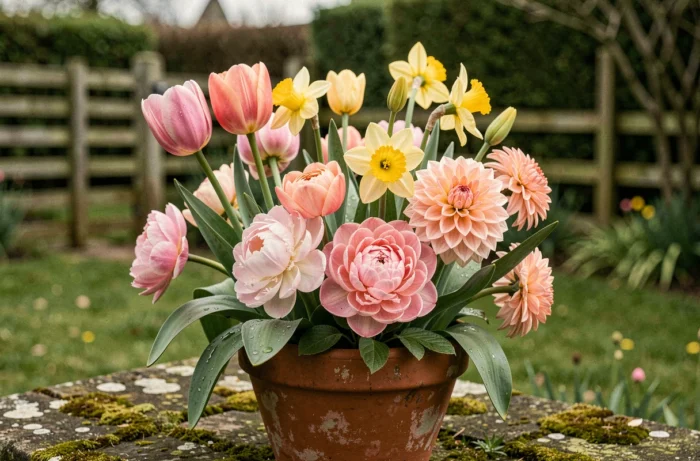
A species that withstands summer drought may struggle with waterlogged conditions in winter or a late spring frost. Systematically replacing traditional perennials with so-called Mediterranean varieties will not solve the problem if the soil remains heavy and waterlogged from November to March. Taking drought resistance, hardiness, soil type and exposure into account together is the only reliable approach.
To plan continuous flowering, four factors should be noted for every plant under consideration:
- The actual flowering period (not just the peak, but the total duration in weeks, which varies by climate zone)
- Summer water requirements and tolerance of winter waterlogging—two factors rarely considered together on plant labels
- Hardiness expressed as a USDA zone, to compare with the actual low temperatures in your municipality rather than the regional average
- Soil type (calcareous, acidic, clay, sandy) and the plot’s natural drainage
A simple personal table listing these four factors for each planned plant can help you spot gaps in flowering and incompatible growing requirements before planting.
Perennials versus annuals: the real work involved in a year-round flower garden
Perennials are often presented as the easy alternative to annuals, which need to be replanted every year. Feedback from municipal horticultural services paints a more nuanced picture. Perennials can require more expertise in pruning and clearing flowerbeds than annuals, which can be removed all at once at the end of the season.
A poorly pruned perennial accumulates dead wood, flowers less and eventually takes up a disproportionate amount of space in the flowerbed. Hardy geraniums, daylilies and asters, for example, need to be cut back carefully to flower well again the following year. Without this, flowering gradually declines.
Annuals (nasturtiums, cosmos and zinnias), on the other hand, offer a density of summer blooms that is hard to match, with maintenance limited to watering and removing spent flowers. The cost of replacing them is their main drawback, but it is offset by the freedom to change the colour scheme each season.
The most practical way to keep a garden in bloom twelve months a year is to combine a framework of perennials and shrubs with staggered flowering (winter heathers, repeat-flowering roses and shrubby salvias) with pockets of annuals replanted in spring and late summer. The perennial framework ensures continuity, while annuals fill the gaps in flowering.
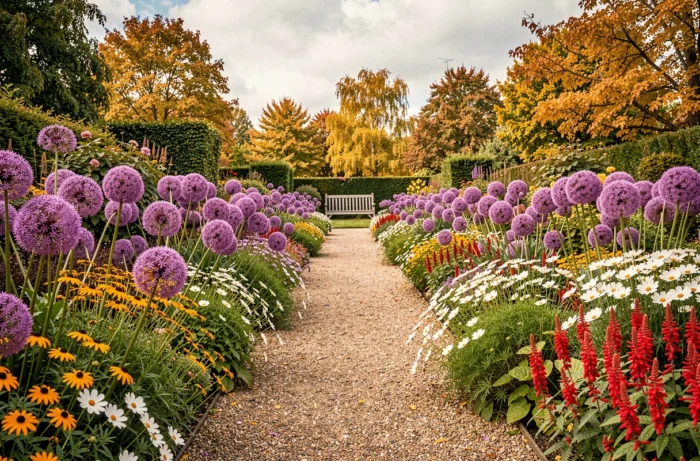
Peat-free growing media and watering: an emerging factor in flower selection
The shift to peat-free growing media, already being tested in municipal planting trials, is changing how plants need to be watered. Trial results reported by Le Lien horticole describe high-quality floral displays in 2026, but also a difficult start due to irrigation. Alternative growing media (coconut fibre, green waste compost) retain water differently: a watering schedule designed for peat is not suitable for peat-free growing media.
For home gardeners, this mainly affects plants in pots, window boxes and raised planters. In open ground, the original growing medium matters less than the structure of the soil itself. If you buy potting mix for seasonal arrangements, check for the words “peat-free” on the bag and adjust watering frequency during the first few weeks of growth to avoid early losses.
Building a resilient flower garden in the face of climate change
A garden in bloom all year round is not necessarily a resilient garden. Quimper’s experience illustrates the difference: some plantings suffer from drought, with effects that may be delayed (visible dieback the following year), while underground constraints (utilities, rocks) can make planting impossible in certain areas.
Three adjustments can make a flower garden more resilient over the long term:
- Always mulch flowerbeds with a thick layer of organic material to reduce evaporation and nourish the soil as it breaks down
- Choose deep-rooted species (lavender, gaura and echinacea) that draw water from below the surface rather than competing with the lawn
- Accept less dense foliage on some shrubs in summer rather than compensating with heavy watering, which weakens the roots
Choosing flowers for a garden that blooms all year round is about more than following a flowering calendar. Every plant you add must pass three checks: regulatory, climatic and practical. Catalogues and labels provide some of the information, but checking the legal status of species and observing how the soil behaves on your own plot are steps no one can take for you.


