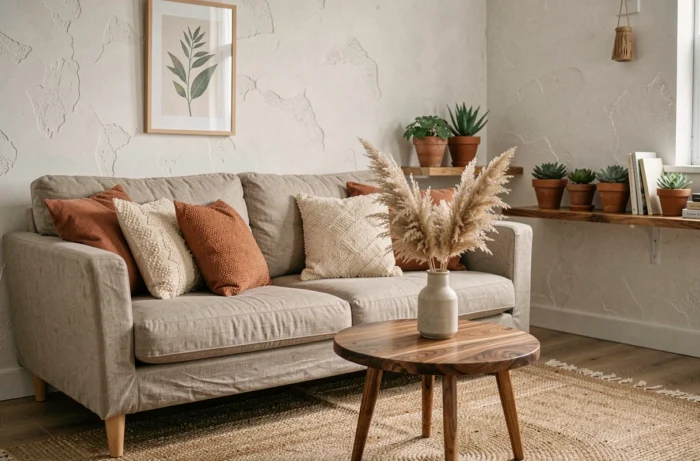
The furniture and home décor market in France is shifting towards more considered purchases. ADEME documents the growing development of reuse and repair sectors, particularly for furniture. In this context, transforming your home no longer necessarily means replacing everything: a few targeted changes to the colours, lighting or existing furniture can alter the feel of an entire room.
Reuse and sustainable furniture: the first decorating opportunity people often overlook
Most decorating guides start with wall colours or the choice of textiles. Before getting to that, it’s worth asking: do you really need to buy new?
Reuse centres, second-hand platforms and local reuse hubs offer furniture at a fraction of its original price. A second-hand solid wood chest of drawers often costs less than a new piece made from particleboard, and is much easier to restore.
For a piece of furniture to remain a good fit in your home over time, it should meet three criteria that go beyond appearance alone:
- Easy to dismantle and reassemble: modular furniture can adapt to a move or a change in how a room is used without needing to be replaced
- The option to replace individual parts (handles, legs, internal shelves) to refresh the style without throwing everything away
- Repairable materials: solid wood can be sanded and repainted, whereas damaged veneer is much less forgiving
Browsing Renov Et Plus’s home décor tips, you’ll find the same emphasis on gradual transformation rather than complete replacement. The idea isn’t to DIY for its own sake, but to extend the life of a piece of furniture by adapting it to a new decorating project.

Colour palettes and natural light: what really changes the feel of a room
Colour remains the quickest way to transform a space. Two or three shades are enough to give a living room or bedroom visual structure. The classic pitfall is using too many shades, which breaks up the room visually instead of bringing it together.
How to put together a colour palette
Use a neutral base (off-white, beige, sand or light grey) across the larger surfaces: walls, floors and main furniture. A single accent colour on one wall or a piece of furniture adds character without overwhelming the space. A third, more subtle shade can be introduced through textiles or accessories to tie everything together.
This approach works just as well in an open-plan living area as in a bedroom. A common mistake is to treat every room separately: the flow between spaces feels more cohesive when the base colours remain consistent from one room to the next.
Make the most of existing light before adding lamps
Before adding more light sources, check that natural light isn’t being blocked by an overly heavy curtain, furniture placed in front of a window or a poorly positioned mirror. A mirror placed opposite a natural light source can brighten an entire hallway without any electrical work.
Natural light directly affects how colours appear. A warm grey can feel cosy in a south-facing room but look dull in a dimly lit north-facing space. Test a paint sample on the wall in question at different times of day to avoid unpleasant surprises once the paint is on.
Decorating ideas for renters: what you can change without risk
The distinction between decorating and making alterations to a property determines what tenants can do without the landlord’s permission. Repainting a wall in a neutral colour, putting up lightweight shelves with removable fixings or changing the curtains generally falls under interior decorating in the usual sense.
By contrast, changing the layout of partition walls, replacing flooring or installing a recessed light requires written permission. Anything that alters the property’s structure or fixed fittings goes beyond simple decorating.
There are ways to work around these restrictions without breaking the rules:
- Peel-and-stick wallpaper can create an accent wall without leaving marks when you move out
- Click-together floor tiles can be laid over existing flooring and removed completely
- Tension-mounted curtain rods fit between two walls without any drilling
These options often cost less than permanent alterations and have the added benefit of moving with you when you next relocate.
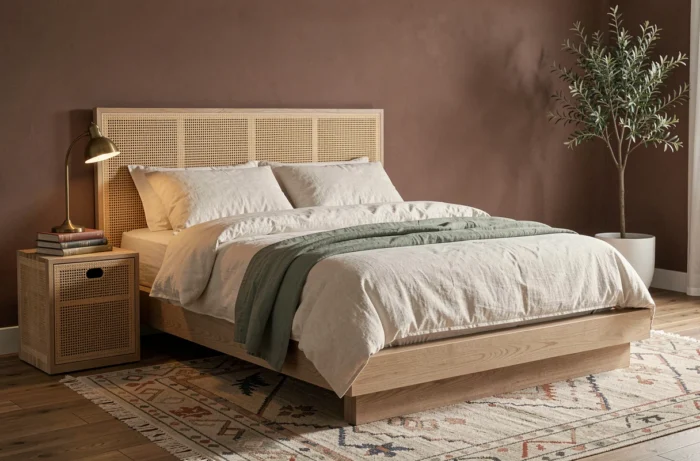
Decluttering a room: the method that instantly makes a space feel bigger
Adding décor to an already cluttered home only makes the problem worse. Before bringing in something new, remove anything that no longer serves a purpose or holds sentimental value. The difference can be visible within hours.
A clear space feels larger without changing a single square metre. Decluttering affects how spacious a room feels as well as how practical it is day to day.
The challenge isn’t technical; it’s deciding what to keep. One simple rule can help: if you haven’t noticed a decorative object for several months, it’s no longer serving a purpose in the room. Give it away, sell it or move it elsewhere to free up space and refresh the look without buying anything new.
Creating a single focal point in each room (a large-format picture, an oversized plant or a sculptural light fixture) gives the eye somewhere to settle. Too many decorative touches dilute the focus and have the opposite effect to the one you want. A living room with one standout feature looks more polished than one where ten objects compete for attention.
Transforming a home has less to do with budget than with method. Declutter before you buy, test colours before you paint, and check the natural light before installing artificial lighting. Following these steps in order helps avoid most of the mistakes that lead to starting all over again.


