
A leather bag whose strap breaks after three months, a belt with a buckle that can’t be replaced, earrings that tarnish the first time they get caught in the rain: we’ve all experienced these disappointments. Choosing a trendy accessory that genuinely elevates an outfit starts with avoiding these pitfalls.
European regulations are pushing in this direction, too: the Extended Producer Responsibility Directive provides for brands’ contributions to be adjusted according to the durability, repairability and recyclability of their products. An accessory’s elegance is also measured by how long it lasts.
Repairability and traceability in fashion accessories: what’s changing in practice
We often talk about the visual impact a piece of jewellery or a bag has on an outfit. We talk less about what happens six months later, when the clasp breaks or the leather starts to crack.
The European Ecodesign for Sustainable Products Regulation establishes a general framework for textile traceability. A digital passport providing information about a product’s composition, origin and repair options is in the works.
The rules specific to textiles still need to be clarified through a delegated act by the Commission, and the timeline remains indicative. So we can’t claim that this passport already applies to accessories, but the direction is clear: composition and traceability will play an increasingly important role in how items are designed.
Another detail to bear in mind: footwear may not follow the same timeline as textile accessories (scarves, fabric belts, bags). The materials and supply chains differ, and the European work plan addresses them in separate sections. When putting together a complete look, this means that a pair of matching ankle boots and a shoulder bag won’t be subject to the same requirements at the same time.
You can already check a few things when choosing a long-lasting accessory, without waiting for regulations to come into force. Among Vêtement Glamour’s accessories, you’ll find pieces with finishes that make this kind of quick pre-purchase check possible.
- The buckle on a leather belt is attached with a screw or a rivet: a screw can be replaced, while a rivet is much harder to replace.
- A bag with a sewn-in lining (rather than a glued one) can be repaired by a local leatherworker.
- Stainless steel jewellery resists oxidation without a fragile surface coating, unlike thin gold plating, which can flake off.

Belts, bags and jewellery: three accessories that transform an outfit without overdoing it
The most common mistake is piling things on. A scarf, a statement necklace, a bold belt and a printed bag, all worn with a plain dress: the result looks like a display stand, not a personal style.
You’ll get a better result by choosing one standout accessory and keeping the others understated. A smooth leather belt with a simple buckle is enough to reshape the silhouette of an oversized jacket or a flowing dress. It defines the waist without adding visual clutter.
The bag as the anchor of your look
The bag is often the most visible accessory—and the one you keep for the longest. A grained leather style in a neutral colour (black, cognac or taupe) works with both office wear and a weekend look. A well-chosen bag can be worn for at least three seasons without feeling tired.
For occasions when you want to make more of a statement, a small structured bag in a bold colour (burgundy, forest green or ink blue) works as a single pop of colour. Keep the rest of the outfit understated and let the bag do the talking.
Jewellery: choose one metal and stick with it
Mixing gold and silver in the same look can work, but it takes a practiced eye. The simplest approach is to choose one metal for the whole outfit. Earrings, a bracelet and a ring in the same gold or silver tone create instant cohesion.
Stainless steel has become a popular choice in recent seasons. It doesn’t tarnish, is unlikely to cause a skin reaction for most people, and its brushed or polished finish works just as well with a minimalist style as with a bolder look.
Adapt your accessories to the season without replacing everything
Replacing your entire accessory collection every time the seasons change makes little sense, either financially or from a sustainability perspective. A small number of versatile pieces can cover most situations.
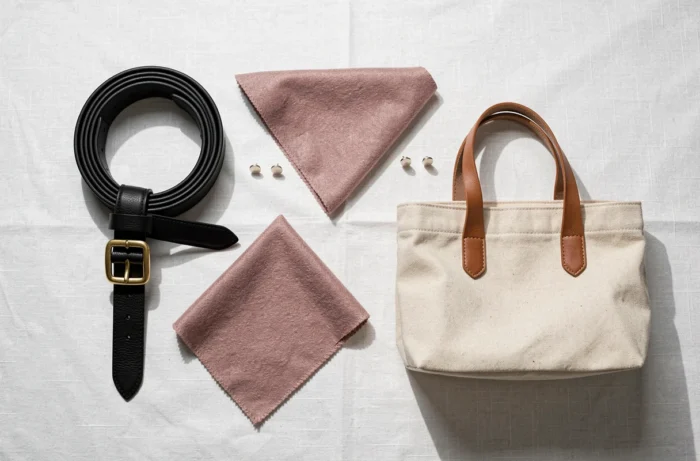
In the in-between seasons, a fine wool or modal scarf works as a light wrap in the morning and a stylish accent in the afternoon, tied to a bag or worn as a soft tie with an open-collar shirt. The scarf remains the most versatile accessory in your wardrobe.
In summer, keep things light: a good-quality pair of sunglasses and a straw or woven cotton hat are all you need to pull a summer look together. Jewellery gets more delicate and bags get smaller.
In winter, a wide belt makes a comeback over coats, breaking up the blocky effect of a puffer jacket or overcoat. Bags shift towards full-grain leather or suede, which handle moisture better than faux leather.
Practical criteria for choosing a durable, elegant accessory
Before buying, you can run through a quick checklist to avoid most unpleasant surprises.
- Check how the metal components are attached: a welded ring is sturdier than one that’s simply bent into shape. On a bag, gently tugging on the clasps gives you an idea of how strong they are.
- Check the actual composition: “genuine leather” tells you nothing about thickness or tanning. Vegetable-tanned full-grain leather ages better than bonded leather, even if the upfront price is higher.
- Think about repairs before you buy: a shoe sole that’s glued back on is not as good as one that’s stitched back on. A cobbler can resole a Goodyear-welted pair, but not a pair assembled using injected adhesive.
- Choose colours you already wear: a trendy accessory in a shade that doesn’t feature elsewhere in your wardrobe will end up at the back of a drawer.
European Extended Producer Responsibility regulations encourage brands to build these criteria into products from the design stage. Some countries may even adjust contributions based on practices associated with ultra-fast fashion. Choosing a repairable accessory is a way to vote with your wallet.
An accessory that elevates an outfit doesn’t have to be the flashiest or the most expensive. It should last, work with what you already own and be repairable if a clasp breaks or a seam comes undone. This combination of style and durability is what sets a considered purchase apart from an impulse buy.


