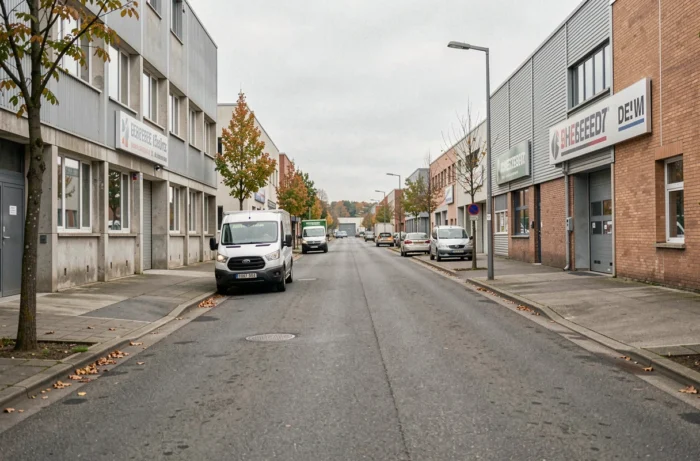
Three French cities share the same street name, Avenue de l’Industrie, but the word “industry” means something different in each one. In Perpignan, Ivry-sur-Seine and Malemort-sur-Corrèze, the avenue serves urban areas, economic activities and property markets that have very little in common. Comparing these three addresses highlights the contrast between an artisan district in the south, a rapidly changing suburb of Paris and a Corrèze road with a logistics focus.
Comparing the three Avenues de l’Industrie
| Criteria | Perpignan (66) | Ivry-sur-Seine (94) | Malemort-sur-Corrèze (19) |
|---|---|---|---|
| Region | Occitanie | Île-de-France | Nouvelle-Aquitaine |
| Type of urban area | Departmental capital | Municipality in the inner suburbs of Paris | Small peri-urban town |
| Main activities identified | Masonry, carpentry, building trades | Local retail, new property developments | Logistics, warehouses, wholesale trade |
| Urban development | Stable business district | Urban renewal (Ivry Confluences project) | Road access, through traffic |
| Residential density | Low along the avenue itself | Rising sharply | Very low |
This table sums up the main points. The most significant differences lie in the types of businesses located there and in each avenue’s trajectory: one remains focused on the building trades, another is becoming more residential, while the third retains its logistics role thanks to its position on a major road.
To better understand the character of Avenue de l’Industrie in Perpignan, it helps to place it within the local economy, which differs greatly from that of a municipality in Val-de-Marne or a small town in Corrèze.
Avenue de l’Industrie in Perpignan: a building-trades hub with deep local roots
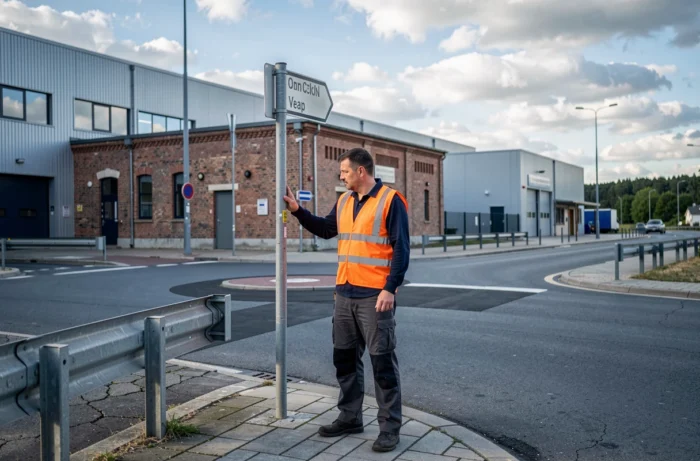
The businesses listed along this avenue in Perpignan paint a consistent picture. They include a masonry and structural work company, as well as a carpentry business, located at high street numbers (above 500). This numbering suggests a long avenue stretching beyond the city centre, typical of the outlying business districts found in southern French regional capitals.
Perpignan’s economic activity is organised around several hubs. Avenue de l’Industrie lies in an area dominated by finishing trades and construction, far removed from the tourist activity of the historic Catalan centre. The avenue has no concentration of retail shops or new residential developments.
A stable economic profile, with no major urban renewal
Unlike in Île-de-France, no major development project is transforming this stretch of the avenue in Perpignan. It remains a practical base for construction professionals and tradespeople. This lack of change is not a drawback: it keeps commercial rents moderate and provides road access suited to utility vehicles.
Ivry-sur-Seine: when Avenue de l’Industrie becomes a residential neighbourhood
Ivry-sur-Seine is a very different case. Its Avenue de l’Industrie lies within the Ivry Confluences project area, an urban renewal scheme transforming the former industrial district of Ivry-Port. New housing developments are being marketed there, close to Parc de la Confluence and the Seine.
The avenue is also home to local businesses that reflect an already mixed-use neighbourhood:
- A bicycle and scooter repair shop, reflecting a growing urban customer base and the rise of active travel
- A Carrefour collection point, confirming the presence of a resident population
- New property developments attracting residents to a neighbourhood that is still under construction
Ivry’s avenue is shifting from a productive role to a residential and commercial one. The transformation is being driven by the local authority and property developers amid the land pressures typical of Paris’s inner suburbs.
Property prices in a different league from the other two cities
Its proximity to Paris, public transport network and redevelopment project make this avenue an area where property values are in a completely different league from those in Perpignan or Malemort. The price gap between this area and a business district in Corrèze or an artisan workshop in Perpignan remains considerable.
Malemort-sur-Corrèze: an avenue geared towards logistics and through traffic
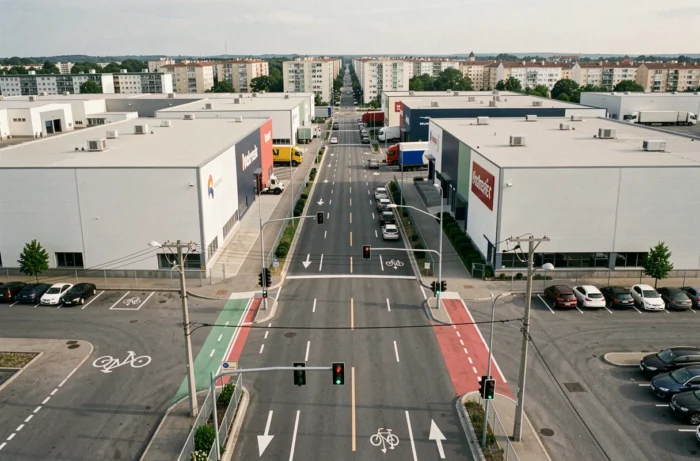
Avenue de l’Industrie in Malemort-sur-Corrèze is located in a business district connected to the main roads serving the Brive area.
It is a typical peri-urban business district, with virtually no residential population. Residential density is virtually zero. The avenue is not part of any urban renewal project comparable to Ivry’s.
One thing in common with Perpignan, one key difference from Ivry
Malemort and Perpignan share one characteristic: their Avenues de l’Industrie remain places of business, not residential neighbourhoods. The difference lies in the types of activity. In Perpignan, the building trades predominate. In Malemort, logistics and freight traffic shape the avenue.
Ivry stands apart from the other two because it is undergoing a shift: the avenue is gradually losing its industrial function in favour of housing and services.
What a street name doesn’t tell you about the neighbourhood
Naming a street “Avenue de l’Industrie” tells you nothing about its current economic vitality, quality of life or potential for change. The three examples examined here make that clear:
- In Perpignan, the avenue remains true to its original purpose, with artisan businesses in the building trades
- In Ivry, the name is becoming a historical remnant in a neighbourhood that is rapidly becoming residential
- In Malemort, the avenue serves a logistics function shaped by the road network around Brive
The street name is an administrative legacy. What really sets these three addresses apart is land pressure, proximity to a major city and local planning decisions. Only Ivry’s avenue is undergoing a profound change in use, driven by the Confluences project and demand for housing in the Paris region. The other two avenues retain a stable local economic role, with no comparable prospect of change.


